
Why Exercise Matters
Most people understand that exercise is important for good health. However, many find it difficult to get started because of busy schedules or other daily commitments.
Regular physical activity is one of the most fundamental habits for maintaining good health. It strengthens muscles and bones, helps prevent lifestyle-related diseases, and contributes to a longer, healthier life.
Exercise and Mortality
In 1989, a large prospective study followed approximately 13,000 adults for more than eight years to investigate the relationship between physical fitness and mortality.
Note: In this study, physical fitness refers to cardiorespiratory fitness, which was assessed using a treadmill exercise test.
The study found that individuals with higher levels of physical fitness had lower rates of all-cause mortality, as well as lower mortality from cardiovascular disease and cancer.
Although numerous studies have since confirmed the health benefits of exercise, this landmark study remains one of the most frequently cited pieces of evidence demonstrating the close relationship between physical fitness, health, and longevity.
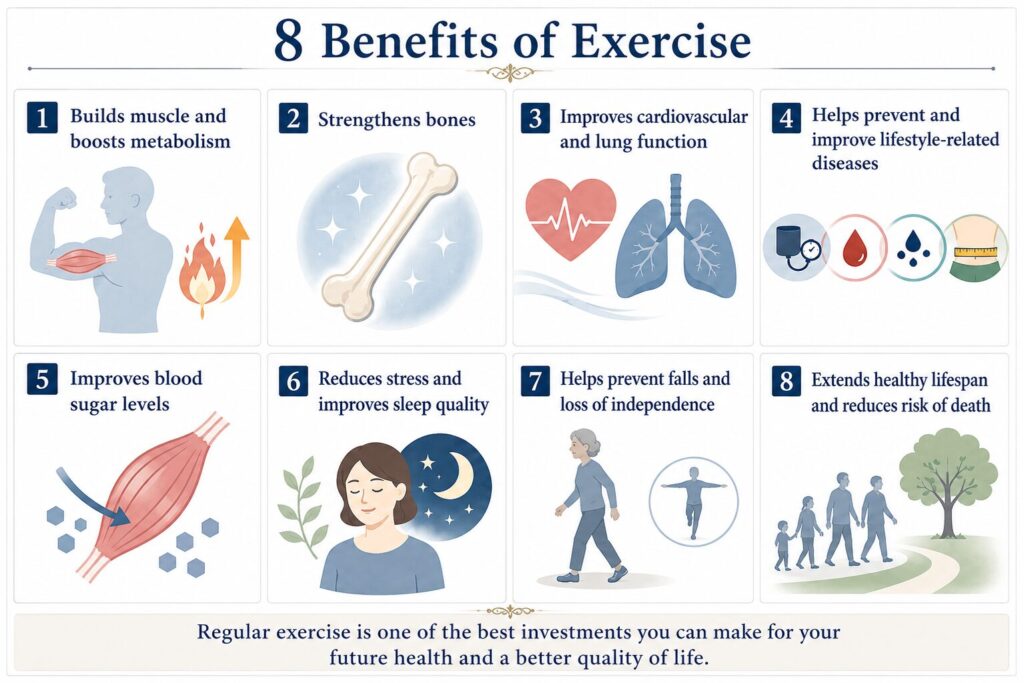
Eight Benefits of Regular Exercise
1. Builds Muscle and Boosts Metabolism
Increasing muscle mass raises your basal metabolic rate, allowing your body to burn more calories even at rest. This makes it easier to maintain a healthy weight.
2. Strengthens Bones
Weight-bearing activities such as walking and resistance training stimulate bone formation, helping maintain bone density and reduce the risk of osteoporosis.
3. Improves Heart and Lung Function
Regular exercise strengthens the heart and lungs, enabling your body to use oxygen more efficiently. As a result, everyday activities become easier and you are less likely to become short of breath.
4. Helps Prevent and Improve Lifestyle-Related Diseases
Exercise plays an important role in preventing and managing conditions such as hypertension, type 2 diabetes, dyslipidemia, and metabolic syndrome.
5. Improves Blood Sugar Control
Skeletal muscle is the body’s largest site for glucose utilization. Regular exercise enhances glucose uptake by muscles, helping maintain healthy blood sugar levels.
6. Reduces Stress and Improves Sleep Quality
Physical activity is an effective way to relieve stress, improve mood, and promote better sleep.
7. Helps Prevent Falls and Maintain Independence
Exercise improves muscle strength and balance, reducing the risk of falls. Maintaining an active lifestyle also helps older adults remain independent.
8. Extends Healthy Life Expectancy and Reduces the Risk of Death
Numerous studies have shown that physically active individuals have a lower risk of premature death from cardiovascular disease and certain cancers, and tend to enjoy a longer healthy life expectancy.
How Much Exercise Is Recommended?
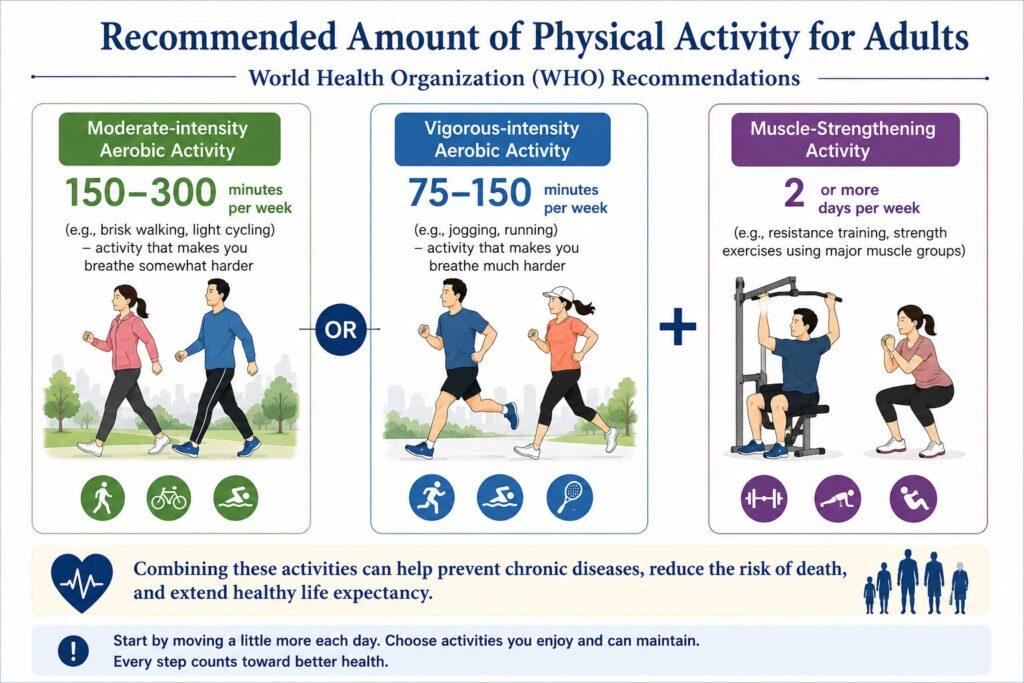
The World Health Organization (WHO) recommends that adults:
- Perform 150–300 minutes of moderate-intensity aerobic activity per week (such as brisk walking).
- OR perform 75–150 minutes of vigorous-intensity aerobic activity per week (such as jogging or running).
- Perform muscle-strengthening activities involving all major muscle groups on at least two days each week.
Research has consistently shown that maintaining this level of physical activity reduces the risk of premature death and many chronic diseases.
The Key Is to Make Exercise a Habit
When people think about exercise, they often assume they need to start playing a sport or join a gym. However, that isn’t necessary.
Simple activities such as getting off one stop early and walking the rest of the way, taking the stairs instead of the elevator, or going for a 20–30 minute walk are all excellent forms of exercise that help you stay active in everyday life.
Walking through city streets or exploring tourist attractions while traveling is another great way to exercise. You can enjoy beautiful scenery while staying physically active, making travel both enjoyable and beneficial for your health.
If you are not accustomed to regular exercise, avoid starting with vigorous activities. Begin with light exercise for short periods and gradually increase both the intensity and duration as your fitness improves.
If you have an existing medical condition or are concerned about your health, consult your physician before starting a new exercise program.
Conclusion
Good health is not achieved overnight.
Small, consistent efforts made every day can make a significant difference to your health 10 or 20 years from now.
Exercise does not have to be difficult or complicated. The most important thing is to choose activities that suit your fitness level and lifestyle, and to continue them consistently.
Every step you take today is an investment in your future health. Why not start with one small step today?