
What Should You Do If You Are Told That Your Cholesterol Is High?
When people hear the word cholesterol, they may immediately think of diseases caused by atherosclerosis, such as stroke and heart attack.
Atherosclerosis begins early in life and gradually progresses with age. When additional risk factors, such as high blood pressure or elevated cholesterol levels, are present, the process can accelerate. As a result, even young people may experience a heart attack or stroke.
As explained in our article on Metabolic Syndrome, atherosclerosis progresses when LDL cholesterol enters the walls of blood vessels.
However, individuals differ in how easily cholesterol enters the vessel walls. In people who are more susceptible, atherosclerosis may progress even when their blood cholesterol levels are not particularly high. Conversely, in those who are less susceptible, the progression may be relatively slow even when cholesterol levels are elevated.
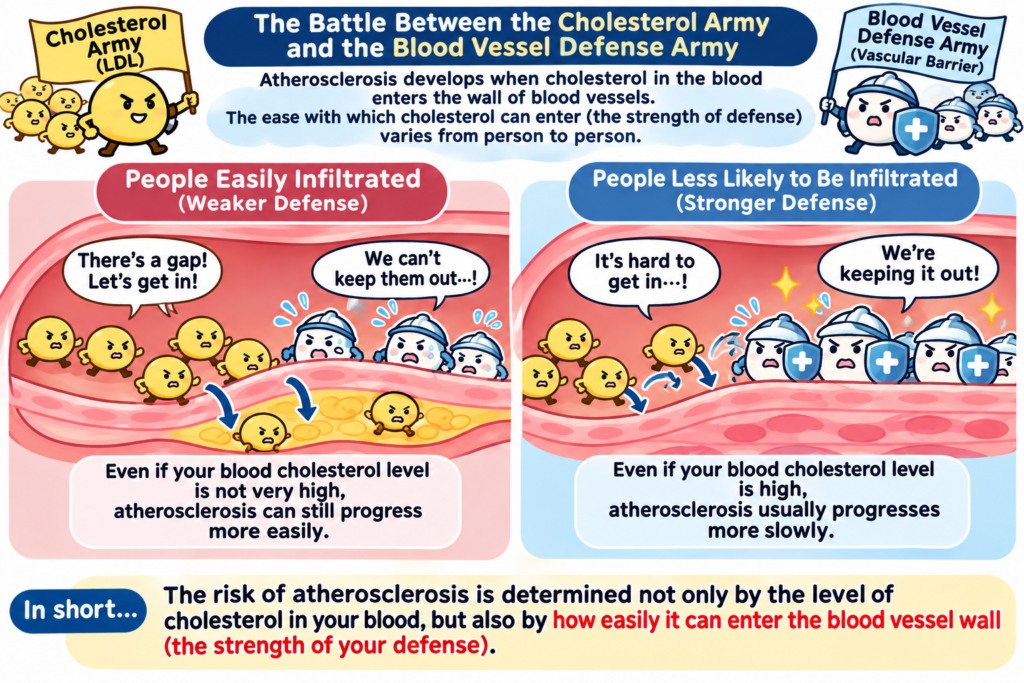
Unfortunately, there is no direct way to measure how easily cholesterol enters the vessel walls. Therefore, much like the assessment used for metabolic syndrome, doctors consider other risk factors, such as high blood pressure and diabetes, to estimate an individual’s risk. Based on this overall assessment, they determine whether treatment is necessary and what cholesterol levels should be targeted.
In other words, it is not possible to determine simply from health screening results whether treatment is necessary or unnecessary.
So, what cholesterol level should you aim for?
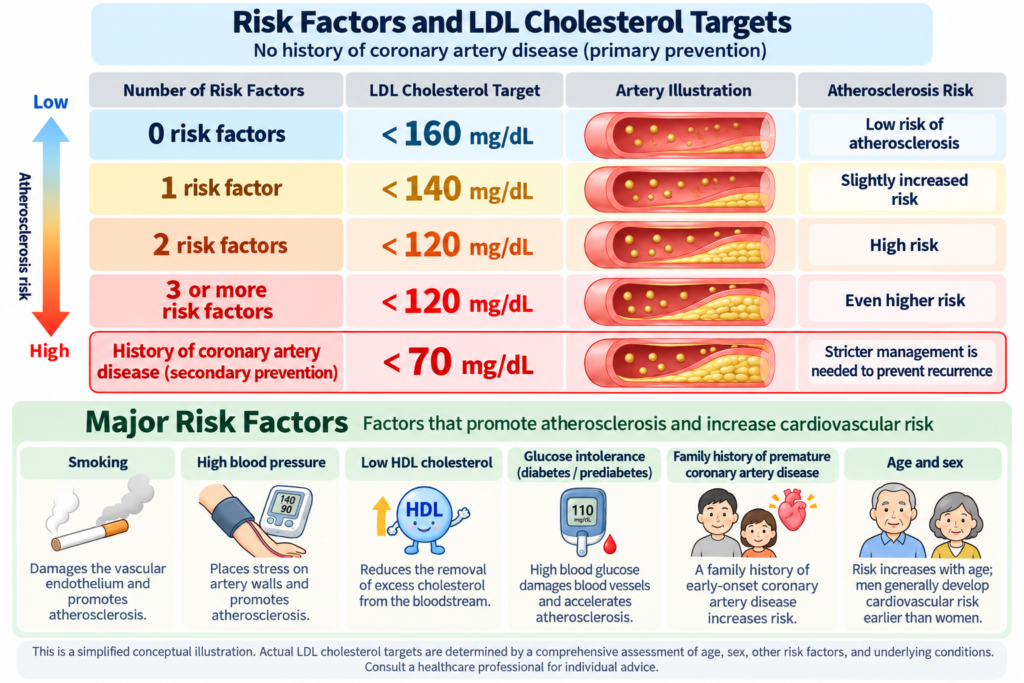
According to the guidelines of the Japan Atherosclerosis Society, target LDL cholesterol levels are determined according to an individual’s future risk of developing cardiovascular diseases, such as heart attacks and strokes.
Specifically, doctors assess several factors together, including:
- Whether the person has already experienced an atherosclerotic cardiovascular disease, such as a heart attack or stroke
- Whether the person has conditions such as diabetes, chronic kidney disease (CKD), or high blood pressure
- Whether the person smokes
- Other risk factors, including age and sex
For example, someone who has already had a heart attack may have been particularly susceptible to cholesterol entering the blood vessel walls, which may have contributed to the development of the disease. To prevent another event, LDL cholesterol needs to be managed to a lower target level.
For people who have not experienced such events, treatment is determined according to their overall risk, including the number of risk factors they have.
As you can see, target cholesterol levels are not the same for everyone. They are determined according to each person’s individual risk. To put it somewhat simply, this risk reflects how easily cholesterol enters the walls of blood vessels.
For this reason, treatment guidelines involve a relatively complex system in which target cholesterol levels vary depending on the number and combination of risk factors.
High cholesterol is not always caused by dietary habits alone. In some cases, it may be associated with other medical conditions, such as hypothyroidism (a hormonal disorder) or nephrotic syndrome (a kidney disorder).
If you are told that your cholesterol is high during a health checkup, do not decide whether treatment is necessary based on the numbers alone. Follow the recommendations in your health screening report, consult a healthcare professional, and discuss the most appropriate approach for your individual situation.
The goal of cholesterol management is not simply to lower laboratory values. What really matters is preventing future heart attacks and strokes and maintaining a healthy life for as long as possible.