A Diet to Lower Cholesterol — Dietary Strategies to Reduce LDL Cholesterol
Cholesterol is often portrayed as a major cause of atherosclerosis. However, it also plays an essential role in the body, serving as a building block for cell membranes and hormones.
In other words, cholesterol is necessary for good health, but too much cholesterol can contribute to the development of atherosclerosis.
There are two main sources of cholesterol in the body:
- Cholesterol obtained from food (exogenous cholesterol)
- Cholesterol produced within the body, mainly by the liver (endogenous cholesterol)
In fact, most of the cholesterol the body needs is produced internally.
So, what kind of diet should we follow to lower cholesterol?
To understand how dietary choices affect cholesterol levels, let’s first look at how cholesterol is transported throughout the body.
How Is Cholesterol Transported in the Body?
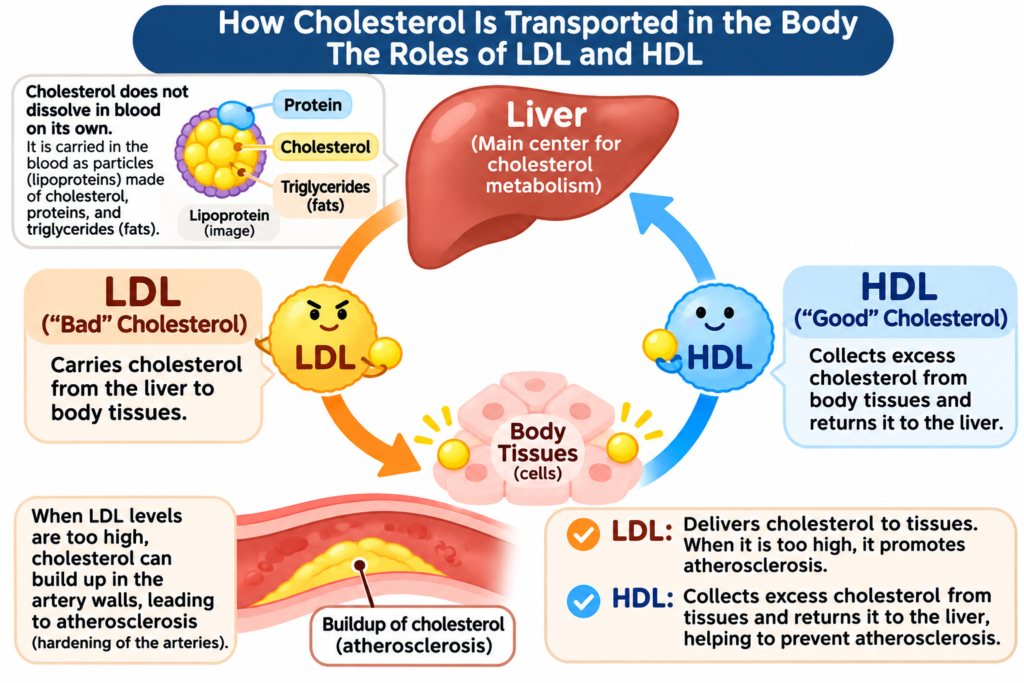
Cholesterol cannot dissolve in blood on its own. Instead, it combines with proteins, triglycerides, and other substances to form particles that circulate through the bloodstream.
There are several types of these particles, but two of the most important are LDL and HDL.
LDL transports cholesterol from the liver to various tissues throughout the body. When LDL levels become too high, the risk of atherosclerosis increases. This is why LDL is commonly known as “bad cholesterol.”
HDL, on the other hand, collects excess cholesterol from tissues and carries it back to the liver. Because it helps protect against atherosclerosis, HDL is commonly called “good cholesterol.”
Reduce Cholesterol Intake from Food
Cholesterol obtained from food is absorbed in the small intestine and transported through the bloodstream, mainly to the liver.
Therefore, to reduce dietary cholesterol intake, it is important to avoid eating too much food that is high in cholesterol.
Common examples include egg yolks, liver, fish roe such as salmon roe and cod roe, and other organ meats.
However, cholesterol from food does not simply translate directly into cholesterol in the blood. The body regulates how much cholesterol it produces and absorbs, so blood cholesterol levels are not determined by diet alone.
Why Should We Avoid Excessive Carbohydrate and Fat Intake?
How does consuming too much carbohydrate or fat affect LDL cholesterol?
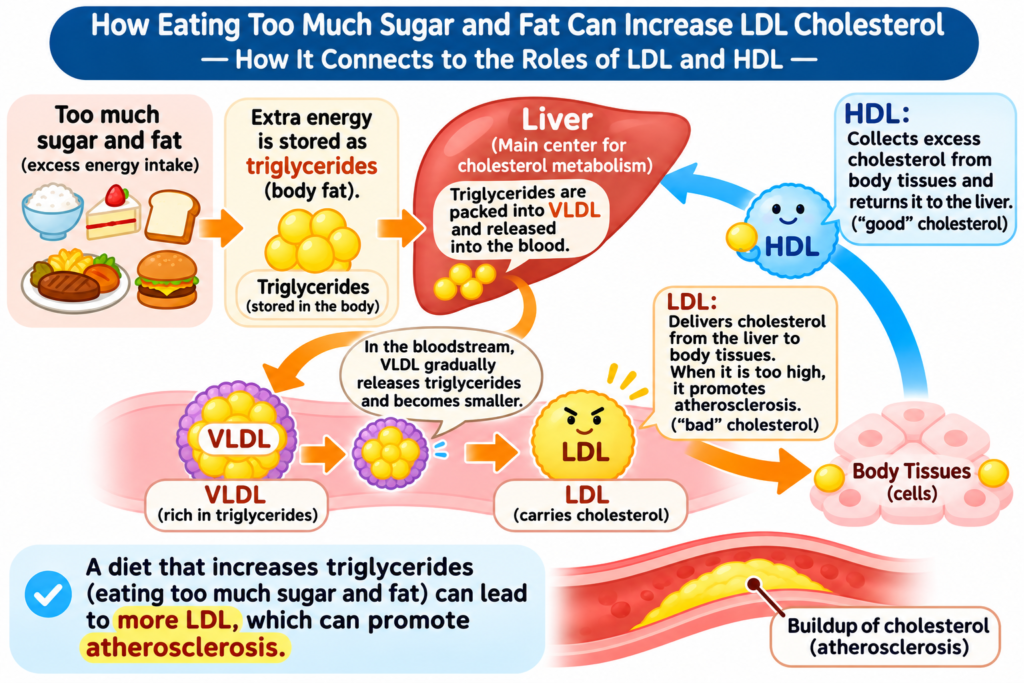
When we consume more carbohydrates and fats than the body needs, some of the excess energy is stored as triglycerides. In addition, excessive carbohydrate intake can stimulate triglyceride production in the liver.
The liver packages these triglycerides into particles called very-low-density lipoproteins (VLDL) and releases them into the bloodstream.
As VLDL particles release triglycerides into the blood, they gradually become smaller and eventually are converted into LDL particles.
For this reason, dietary habits that increase triglyceride levels can also affect LDL cholesterol levels.
Carbohydrates and fats are essential nutrients, but it is important not to consume them in excess.
Saturated Fatty Acids and Unsaturated Fatty Acids
Another important factor to consider when trying to lower LDL cholesterol is saturated fat.
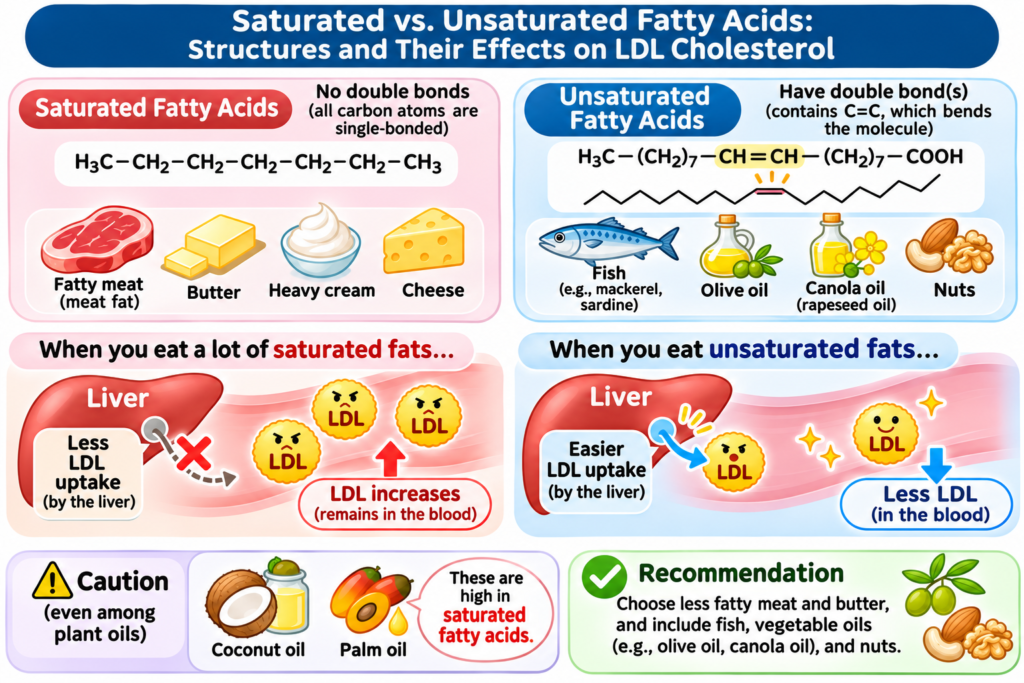
There are several types of dietary fat. Saturated fatty acids are commonly found in fatty cuts of meat, butter, heavy cream, and cheese.
Consuming too much saturated fat reduces the liver’s ability to take up LDL cholesterol from the bloodstream. As a result, more LDL remains in the blood.
Unsaturated fatty acids, which are abundant in fish, vegetable oils, and nuts, are less likely to raise LDL cholesterol than saturated fatty acids.
Replacing fatty meats and butter with fish, vegetable oils, and nuts may help lower LDL cholesterol.
It is worth noting that some plant-based oils, such as coconut oil and palm oil, are high in saturated fat. Not all plant-based oils are necessarily healthy choices.
Lower Cholesterol with Soluble Fiber
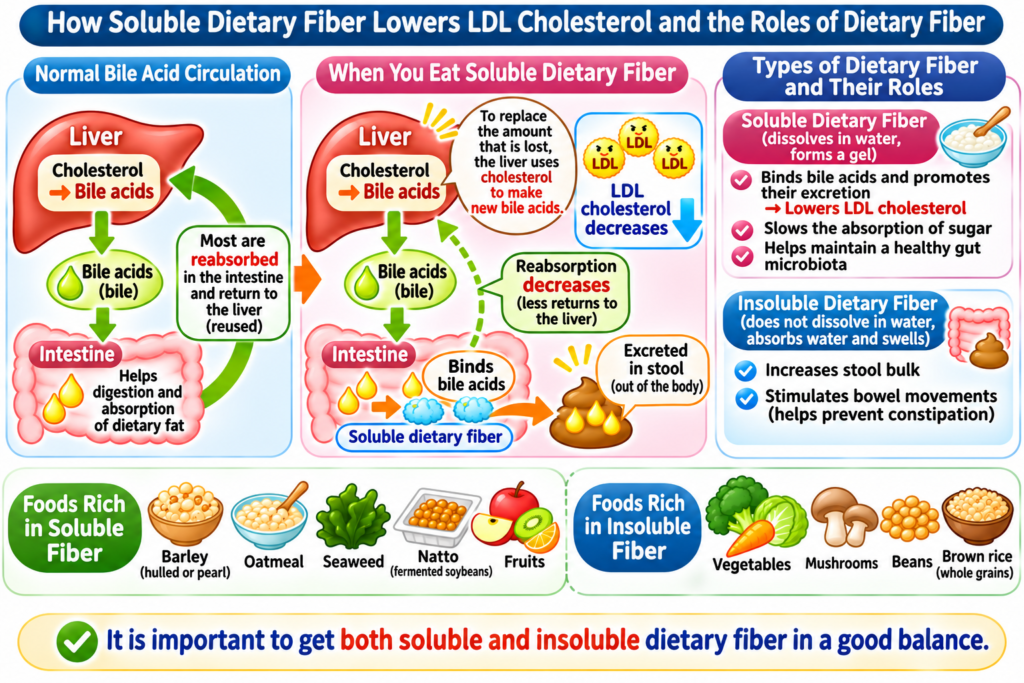
Another important factor in lowering cholesterol is the role of bile acids.
Bile acids are made in the liver from cholesterol and released into the intestine as part of bile. They help the body digest and absorb dietary fats.
In fact, most bile acids released into the intestine are not eliminated from the body. Instead, they are reabsorbed through the intestinal wall and returned to the liver.
In this way, bile acids circulate repeatedly between the liver and the intestine.
This is where soluble fiber comes in.
Soluble fiber binds to bile acids in the intestine and helps carry them out of the body in the stool.
When bile acids are lost, the liver needs to produce more to replace them. To do so, it uses cholesterol.
In this way, consuming soluble fiber helps the body use up cholesterol and can contribute to lowering LDL cholesterol levels.
Foods rich in soluble fiber include barley, pearl barley, oatmeal, seaweed, natto (fermented soybeans), and fruit.
Try to include these foods in your daily diet.
Consider the Timing of Your Meals
At night, the body enters a resting state, and its ability to process carbohydrates decreases. As a result, eating just before bedtime can make it easier for triglyceride levels to rise, while excess energy is more likely to be stored as fat.
In particular, excessive carbohydrate intake can stimulate triglyceride production in the liver and increase VLDL levels. As VLDL is metabolized, it is converted into LDL, which may contribute to an increase in LDL levels.
For this reason, try not to eat dinner too late, and avoid eating snacks just before going to bed.
Summary
Let’s organize the key dietary strategies for lowering cholesterol into five targets.
Target 1: Reduce cholesterol intake from food
- Avoid excessive consumption of foods high in cholesterol, such as egg yolks, organ meats, and fish roe.
Target 2: Help prevent an increase in triglycerides
- Avoid excessive carbohydrate and fat intake, and be mindful of consuming more calories than your body needs.
Target 3: Choose fats that are less likely to raise LDL cholesterol
- Limit saturated fats found in fatty meats and butter.
- Include unsaturated fats from fish, vegetable oils, and nuts.
Target 4: Reduce the reabsorption of bile acids in the intestine
- Eat plenty of soluble fiber from foods such as barley, seaweed, and fruit.
Target 5: Avoid eating just before bedtime
- At night, the body’s ability to process carbohydrates decreases. Excess carbohydrates are more likely to be converted into triglycerides, which may contribute to an increase in LDL cholesterol. Try to avoid late-night snacks.
In short, the key to lowering cholesterol is to limit fatty meats and butter, include more fish and plant-based foods, and pay attention not only to what you eat but also to when you eat.
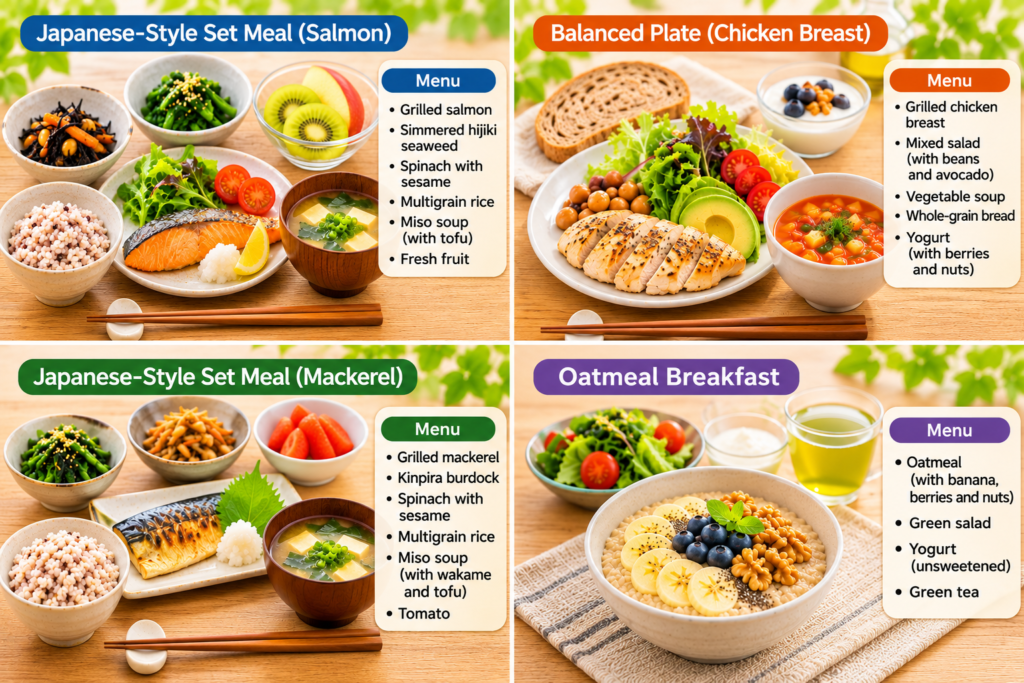
<Dietary Meal Examples>